
Blog / Strength
When should you add weight? Progressive overload, made simple
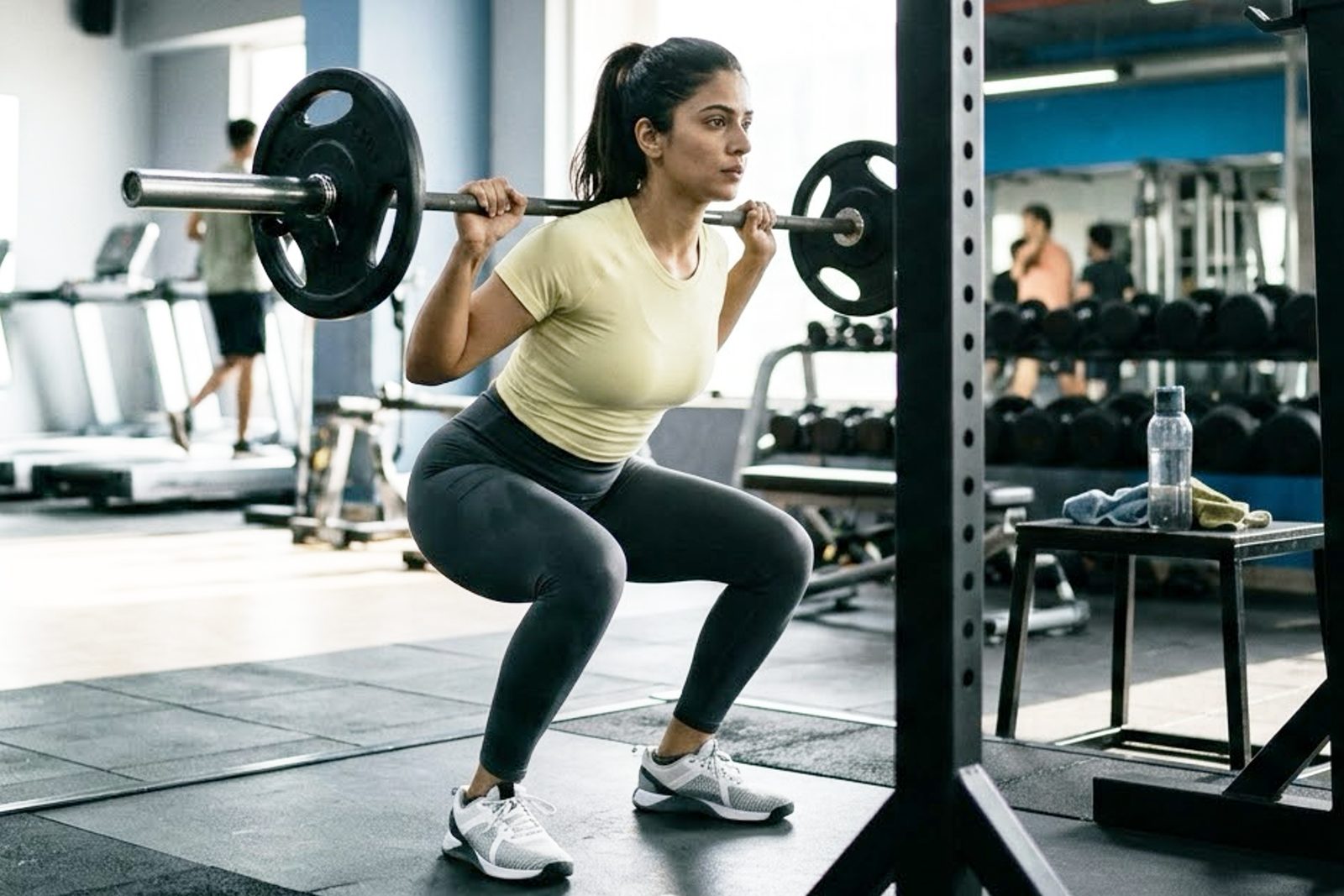
Sofia has trained three times a week for a year. She knows the machines and never skips leg day. But when she looks back in her notes, the numbers are the same as in spring: 40 kg on the hip thrust, 10 kg dumbbells for lunges. She works hard. So why isn't she getting stronger?
The answer is almost always the same: her body has no reason to change anymore. It already handles what she asks of it.
What progressive overload means
Muscles grow and get stronger when you ask a little more of them than they're used to. Then they adapt, and you ask a little more again. That slow, steady "a bit more" is called progressive overload. It's the main rule behind every training plan that works.
"More" doesn't only mean more weight. You can also do more reps with the same weight. A 2022 study tested exactly that. Trained adults did eight weeks of leg training. One group added weight and kept the reps the same; the other kept the weight and added reps. Both groups grew their muscles and got stronger by about the same amount. Strength leaned slightly toward the weight group, and one thigh muscle grew slightly more in the reps group, but the differences were small.
In short: adding weight works, adding reps works, and you can use both.
The easiest way to do it: double progression
Most good coaches use a simple method that combines both. It's called double progression:
- Pick a rep range, for example 8 to 12 reps.
- Pick a weight you can lift at least 8 times with good form, with only one or two reps left in the tank.
- Each workout, try to add a rep to your sets, with the same weight.
- When you reach the top of the range on every set (12, 12, 12), go one step heavier next time.
- With the new weight, you'll be back near the bottom of the range. Build up again.
An example on the hip thrust:
| Workout | Weight | Reps (3 sets) | Next time |
|---|---|---|---|
| 1 | 40 kg | 9, 8, 8 | Same weight, try for more reps |
| 2 | 40 kg | 11, 10, 10 | Same weight, try for more reps |
| 3 | 40 kg | 12, 12, 12 | Go heavier: 42.5 kg |
| 4 | 42.5 kg | 10, 9, 9 | Build up again |
How much heavier?
Smaller than you think. The step depends on the equipment:
- Light dumbbells: 1 kg per hand is already a big jump on a 5 kg lateral raise.
- Barbell: 2.5 kg (1.25 kg on each side) is a normal step. On big leg lifts above about 60 kg, 5 kg can work.
- Machines and cables: the smallest step on the stack, often 1.25 to 2.5 kg.
Small steps add up. Going from 40 to 42.5 kg every few weeks, whenever you reach the top of your range, can add up to 10 kg more on your hip thrust over a few months.
What if you get stuck?
Everyone hits a wall at some point. Some simple rules help:
- Below the bottom of your range twice in a row? The weight is too heavy for now. Go about 10% lighter and build up again.
- One bad day? Sleep, stress and your cycle all play a part. One bad workout means nothing; look at the trend.
- Back after a few weeks off? Start a bit lighter than before. You'll be back to your old numbers quickly.
- No progress for several workouts? Try a lighter week, change the rep range, or swap to a similar exercise for a few weeks.
The new 2026 guidelines from the American College of Sports Medicine, based on 137 research reviews, say the same thing in a different way: consistency and effort matter more than a perfect, complicated plan.
Where GymGirl fits in
Keeping track of all this in your head is the hard part. GymGirl's built-in coach uses exactly these double progression rules on your own workouts. It sets a rep range for each exercise, and when you hit the top on every set, it tells you to go heavier and by how much, in the steps your equipment really has. It suggests lighter when you struggle twice in a row, and an easier restart after a break. No guessing, just lifting.
Plan to try: stuck at the same weights for a while? Sculpt & Strong, the GymGirl Special, alternates a Sculpt block and a Strong block, so your training keeps changing while the coach keeps you progressing.
Sources
- Plotkin D et al. (2022). Progressive overload without progressing load? The effects of load or repetition progression on muscular adaptations. PeerJ 10:e14142.
- American College of Sports Medicine (2026). ACSM unveils landmark 2026 resistance training guidelines. Position Stand in Medicine & Science in Sports & Exercise.
This article is general information, not medical advice.
Read next
 Strength
 Strength